
How to Teach Earthquake Safety to Kids
I earn a commission from products purchased through links in this post.
Earthquakes are scary. They come without warning and can cause a huge amount of damage. If you live in an earthquake zone, it is important to teach earthquake safety to kids.
We moved to Washington right about the time that the fear-mongering New Yorker article calling for the BIG ONE on the Pacific Northwest hit the stands. It was definitely a source of anxiety for me.
Earthquakes aren’t really a thing in VA. They happen occasionally, but it is rare to actually feel them. We felt an earthquake there in 2010, but it was fairly small. It was scary for a minute, but nothing broke, and no one was hurt. Everyone went outside, so it ended up being an unexpected way to meet neighbors.
Earthquakes, especially the BIG ONE, were a concern moving to the Seattle area. I laid awake many nights before deciding that we just needed a plan. I was going to take care of what I could reasonably do and let go of the rest.
There is no way to prevent or predict earthquakes, so we have to prepare and plan.
How to Teach Earthquake Safety to Kids
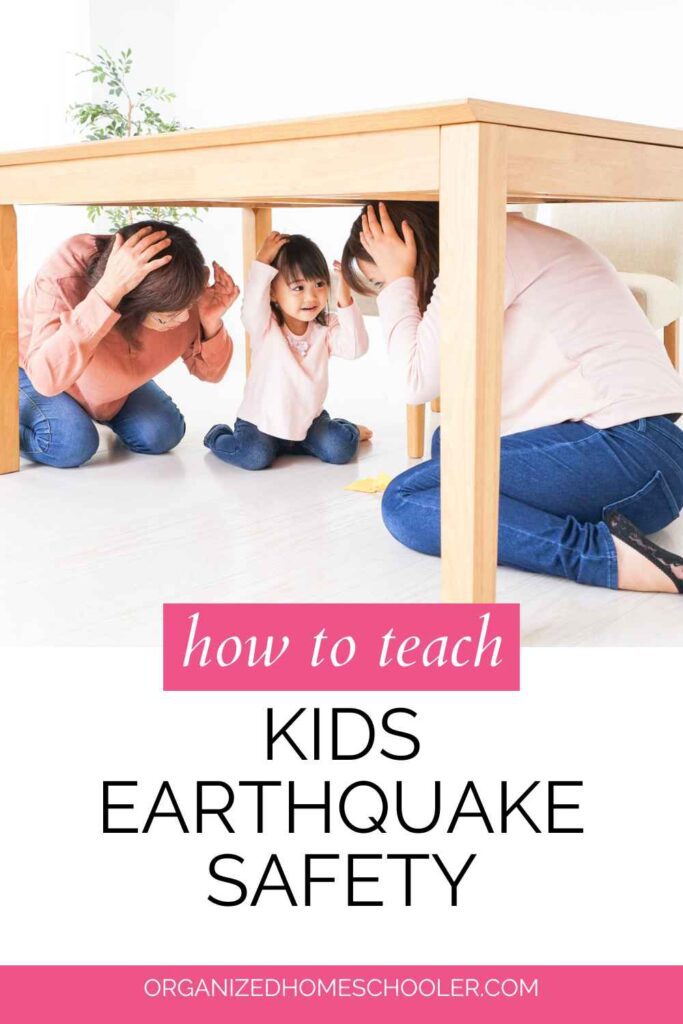
If you live in an area prone to earthquakes, it is a good idea to teach earthquake safety to kids from a young age. These suggestions are how I taught my own children (9 and 12) to manage earthquakes. They will also work with kids much younger. Continued conversations and practices are essential.
Teach Earthquake Safety to Kids Through Books
Books are an excellent way to teach earthquake safety to kids. They can learn earthquake safety skills by learning why earthquakes happen, what can happen after the shaking stops, and simple steps they can take to stay safe.
Earthquakes by Franklyn M. Branley


Last update on 2026-09-18 / Affiliate links / Images from Amazon Product Advertising API
This picture book is a Let’s Read and Find Out Science Level 2 book. It explains why earthquakes happen and what might happen during an earthquake. It points out that sometimes earthquakes can cause fires and floods. This isn’t intended to scare children, but to prepare them for all possibilities.
This book provides guidance on what to do during an earthquake. It gives actionable tips, which can go a long way in staying safe.
I recommend you skip the last page, which shows a chart of the top ten most destructive earthquakes. It isn’t helpful for a child to know that an earthquake can kill 100,000+ people.
Surviving an Earthquake by Heather Adamson

Last update on 2026-09-18 / Affiliate links / Images from Amazon Product Advertising API
This short book also provides information about the cause of earthquakes and how to react. I like that it goes into a little more detail about why you need to be careful even after an earthquake passes. Aftershocks are scary, but even more so if you don’t know they can happen.

Last update on 2026-09-18 / Affiliate links / Images from Amazon Product Advertising API
This picture book is different from the others because it follows the story of a young child during the 1906 San Francisco earthquake. While your child will not be able to relate to being carted over to the Golden Gate Park, the book shows that even though something was very scary, a community can work together and be okay.
Teaching Earthquake Safety to Kids by Identifying Safe Areas
During an earthquake, you need to take cover to protect yourself from falling objects. The safest spots will be under tables or in doorways. I have no doubt that I will run at lightning speed to get to my children during an earthquake, but I want them to be able to identify safe areas on their own, too.
Walk through your home, room by room, and point out the safest earthquake spots. Try to avoid being near windows and large pieces of heavy furniture.
After you have identified safe areas in your home, practice a few earthquake drills. We can’t simulate the rolling shaking feeling of an earthquake, but we can yell “Earthquake” and practice getting into safe spots.
An earthquake might strike while you are out and about. Take a few minutes to identify safe spots when you are at your homeschool co-op or your neighborhood park. You will want to avoid areas under power lines and near buildings. We plan to run to the large open field at our favorite playground in the event of an earthquake.
Teach Earthquake Safety to Kids by Preparing an Earthquake Kit
Everyone living in an earthquake-prone area needs to have an emergency earthquake kit. The internet is full of earthquake kit supply lists (written by people far more qualified than me), but here are a few things I recommend for households with children:
- Emergency food that your kids will actually want to eat – protein bars, Cheerios, apple sauce pouches, etc.
- Bottled water
- Emergency whistles – one for each family member.
- Activity books and crayons – the power might be out for a while, so a few new activity books will help kids stay occupied
- Lanterns and glow sticks – you will need a way to see debris if the power is out
- First aid kit stocked with extra prescription medicines and kid-friendly over-the-counter medicines
Children can help you assemble your earthquake kit. If your children are old enough to stay home alone, they need to know where the earthquake kit is located. If your children are young, make sure the babysitter knows where to find these supplies.
Taking steps to stay safe helps kids (and adults) feel in control and safe.
Earthquake safety needs to be reviewed anytime kids enter new phases with new responsibilities. They need to know what to do to survive during and after an earthquake, even if they are not with a parent.
Review earthquake safety guidelines when your child:
- Begins staying home alone
- Begins driving
- Can be dropped off at activities without you.
Teaching earthquake safety to kids can protect your family in an emergency.
Want to learn even more about earthquakes? Try this online earthquake unit study!
As an Amazon Associate I earn from qualifying purchases.
Keep reading . . .