
Give Your Children a World Class Education
I earn a commission from products purchased through links in this post.
I recently came across The Smartest Kids in the World and How They Got That Way by Amanda Ripley. In this book, Ms. Ripley explores why some countries score higher on the PISA, an international standardized test. What policies and traditions have helped these students achieve higher scores than the rest of the world? What truly creates a world class education?
As soon as I picked up this book on our trip to Portland, I wondered if it could help me give my children a world class education. I want to give them the best education possible, but moving to another country isn’t exactly realistic.
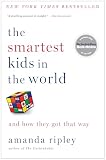

Last update on 2026-09-20 / Affiliate links / Images from Amazon Product Advertising API
This book goes beyond just reporting test scores and education policies. Ms. Ripley followed foreign exchange students from America studying in South Korea, Poland, and Finland. This gave her, and us, a student’s perspective.
I was excited to read about the Finland foreign exchange student because Finland’s educational strategy makes the news often. Finish students seem to have the perfect balance between education and free time.
I thought I knew what this book would say about why America does not rank towards the top. Nope. It is a complex issue, but let’s just say that while there are things out of our control, there is A LOT that we can do differently.
I wish I could give a copy of this book to each and every elected official that has anything to do with education policy here in the United States. Top performing countries do things quite a bit differently and we can definitely take a few notes.
One thing I love about homeschooling is that we don’t need to wait for a reform in educational policy to make changes. We are the people responsible for educating our children, and can make changes as we see fit so that we can provide a world class education.
Here are a few common themes among top performing countries.

How to Give Your Child a World Class Education
Read to your child
Every single day. Books provide the basic building blocks of education. It is important that your kids see you reading too so they understand this is a life long skill.
Let kids experience failure when they are young
This is a hard one. We want to protect our kids and we want them to be happy. We do them a disservice though when we step in and solve every problem for them. They truly NEED to experience failure. Psychology Today says that failure is a learning experience of its own.
Have high expectations
Kids will often meet our expectations so set them high and help them reach their full potential.
Teach your kids HOW to think
Learning how to think is far more important than learning WHAT to think. History lessons are a great way to begin making this shift.
I don’t worry about my children remembering specific dates as long as they know the general timeline. Instead, I focus lessons on exploring why an event happened. What lead up to the event and what was the outcome? Why? You might be amazed at the conversations you will have with your children when they think for themselves.
This goes back to having high expectations. Challenge your children. One of the benefits of homeschooling is that we are not stuck with one grade level. Our kids can work at their own pace and move up to the next level as soon as content is mastered.
Go ‘deep’ in lessons
Going deep, rather than broad, can start at a young age by following a child’s interest. Going deep with a lesson means exploring a topic thoroughly before moving on to the next topic. For example, if a child is interested in fish, they can learn the characteristics, the latin names, the habitats, the anatomy, etc. This can help your child make connections to other areas of knowledge.
Grade on results, not effort
The rest of the world does not give an A for effort. You can still act as cheerleader and encourage your child, but hold them accountable to learning the material, even if it happens at their own pace. Many homeschoolers do not give grades until middle school. That is completely fine. If you teach a topic until mastery, your children will learn not to give up.
Implementing these strategies requires a bit of a shift in thinking about education. They are not a quick fix. These changes will be worth it though if our children can compete globally when they are adults.
I highly recommend reading The Smartest Kids in the World and How They Got That Way.
What do you admire about foreign educational policies?
As an Amazon Associate I earn from qualifying purchases.
Related Posts:

