
15 Fun St. Patrick’s Day Science Activities
I earn a commission from products purchased through links in this post.
These St. Patrick’s Day science activities for kids are a fun way to explore a variety of science topics. Kids can do experiments and activities related to Saint Patrick’s Day themes:
- Leprechauns
- Shamrocks (3 or 4 leaf clover)
- Rainbows
- Gold
Add these St. Patrick’s Day science experiments to your March lesson plans. Adding in educational seasonal activities is a great way to keep kids interested in learning.
St. Patrick’s Day Science Activities
Book-Inspired St. Patrick’s Day STEM Activities
1. How to Build a Leprechaun Trap

Last update on 2026-09-16 / Affiliate links / Images from Amazon Product Advertising API
Building a leprechaun trap is a classic St. Patrick’s Day STEM activity. This book gives directions for 16 different traps! There are also festive craft and snack ideas like a marshmallow catapult, rainbow ice tunnels, and mini windmills. Kids can get creative while they build their own leprechaun trap.
2. Let’s Make a Rainbow! by Chris Ferrie

Last update on 2026-09-16 / Affiliate links / Images from Amazon Product Advertising API
Kids can learn all about the science of light with this book. There are even rainbow STEM challenges included right in the book. However, this book would also pair with just about any rainbow science experiment. Rainbow science experiments are perfect for Saint Patrick’s Day.
3. Jamie O’Rourke and the Big Potato by Tomie dePaola

Last update on 2026-09-16 / Affiliate links / Images from Amazon Product Advertising API
This picture book is solidly in the fiction category. It isn’t a science book by any stretch of the imagination. However, sometimes fiction books are a great opportunity to weave in a little education.
A potato clock is a perfect experiment to try after reading this cute story.
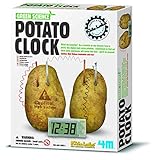
- The Potato Clock uses a pair of ordinary spuds to power a digital clock.
- This kit includes a digital clock, wires and prongs; two potatoes are all that’s needed to create a working clock.
- This kit is ideal for young science enthusiasts, and offers a valuable lesson on the transformative power of green science.
Last update on 2026-09-16 / Affiliate links / Images from Amazon Product Advertising API
4. Mouse Paint by Ellen Stoll Walsh

Last update on 2026-09-16 / Affiliate links / Images from Amazon Product Advertising API
When I worked with young children, this book was my favorite way to teach color mixing. Read the book and then act it out with your kids. This free color-mixing printable pack from totschooling.net is a great way for kids to try making green, purple, and orange.
On the surface, this might feel like a craft activity, not science. However, it is both! Go ahead and explain the reason color mixing works to your little ones.
St. Patrick’s Day Science Experiments and Activities
5. Homemade Spectroscope – A spectroscope is a device that splits light into different wavelengths. I purchased one for our homeschool science kit years ago, but they are also easy to make yourself.
You probably already have all of the simple materials you need to make a spectroscope. You will need a cardboard tube (the kind from paper towels), cardboard, an old CD, decorating materials (optional, but fun), a writing utensil, and a craft knife. Grab the full directions from Hessunacademy.com.
6. Lucky Charms Catapult – Kids always seem to love making catapults, so why not give it a festive seasonal flair? All you truly need for this activity is Lucky Charms cereal and the supplies to build the catapult (craft sticks, rubber bands, and a plastic spoon).
Challenge your kids to try different techniques to launch the cereal further. Maybe even let them try launching a few different items to see if they can investigate what works best.

7. Candy Rainbow – Saint Patrick’s Day and rainbows go hand in hand. When I think of rainbows, I think of Skittles. Their marketing pitch of ‘taste the rainbow’ lives rent-free in my brain.
This activity encourages little scientists to arrange the Skittles candies around the perimeter of a plate. Then warm water is added and the color begins to bleed out of the candies until there is a rainbow of colors on your plate. All you need is a bag of Skittles, warm water, and a plate.
If your kids enjoy this experiment, encourage them to try changing a variable and see how it impacts the results. Easy variables to change are the water temperature, type of liquid, and type of candy.
8. Leprechaun Toothpaste – You might already have everything you need to make leprechaun toothpaste! All you need are an empty salt shaker, 6% hydrogen peroxide, green food coloring, liquid dish soap, active yeast, and water. You will want a baking dish or something similar to help contain the mess.
Chemical reactions with visible changes are always so much fun for kids. It feels like magic, but thestemlaboratory.com will explain the science.
9. Sink Pots of Gold – Little children seem to love playing with water so we might as well make it educational. You will need little leprechaun pots and some sort of ‘gold’ for this activity. The gold can be regular coins or beans (just be sure to watch your young kids to avoid choking). In my kindergarten teacher days, I spray painted dry lima beans gold to look like gold nuggets and that would absolutely work here too.
Float the leprechaun pots in a container of water (the sink works well) and challenge the kids to sink the pot using their gold. This is a great way to investigate buoyancy.
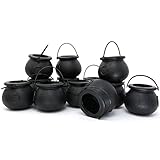
- Big Mo’s Toys Candy Kettles are the perfect party favor for Halloween and St. Patrick’s Day
- Ideal Trick or Treat Candy Collecting Bucket.
- Kettles are 3” wide and have a height of about 2.5”.
Last update on 2026-09-16 / Affiliate links / Images from Amazon Product Advertising API
10. Salt Crystal Shamrock – Watching crystals grow is a favorite science activity for little learners. It can feel magical, especially because young children think crystals are so pretty. Funwithmama.com has the directions for this activity.
This St. Patrick’s Day science activity requires things you probably already have at home:
- A container (repurposed glass jars work well)
- A pencil
- Green pipe cleaners (any color will work, but green seems most fitting for a shamrock)
- Salt
- Water
Crystals don’t grow instantly, so plan to leave the shamrock pipe cleaners sitting in the solution for about two days.
11. Clean a Penny – Pennies are covered in copper oxide, not gold, but I think coins in general can be associated with Saint Patrick’s Day, at least for our science purposes. Take a few pennies out of your change jar and let kids examine the
12. Fools Gold Kit – Pyrite, aka fools gold, tends to be a favorite among young rock collectors. My son was always so excited to find it when he was little.
This science kit from National Geographic includes a learning guide to teach kids about this mineral. Kids will get a chance to carefully excavate pyrite from inside ‘gold’ bars. This is a great activity but it can get messy, so I recommend doing it outside.
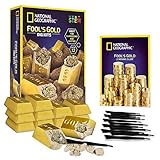
- EXCAVATE INCREDIBLE PYRITE – Excavate genuine pyrite specimens from each gold bar-shaped dig brick in the kit and learn more about the gold rush and…
- MADE TO SHARE – This fool’s gold dig kit has enough individually-wrapped dig bricks and digging tools to share with friends and classmates. A great…
- INSPIRING SCIENCE – The activity kit encourages a deeper love of scientific discovery and earth science, allowing kids to get a hands-on experience…

Last update on 2026-09-16 / Affiliate links / Images from Amazon Product Advertising API
13. Make a Liquid Rainbow – Introduce your children to the concept of density with this rainbow-themed St. Patrick’s Day science experiment. Children will slowly add a variety of household liquids to a clear glass or jar. The different densities will become obvious as they separate into a rainbow. It is a great experiment!
14. Magic Leprechaun Rocks – Magic leprechaun rocks are a fun twist on a classic science experiment – mixing baking soda and vinegar to see the chemical reaction. Kids always love watching the fizz develop. Filling the ‘rocks’ with gold coins is a fun way to add another level of excitement.
15. Tricky St. Patrick’s Day Slime (aka oobleck) – Kids of all ages seem to enjoy playing with oobleck, so this is a fun activity to add to our March plans. Non-Newtonian fluids always feel so weird! Leprechauns are rumored to be tricky little creatures so making a tricky slime is a great St. Patrick’s Day science activity. Sensory play can be lots of fun!
I hope these St. Patrick’s Day science experiments help you enjoy science with your kids. Learning can be fun! Add these fun activities to your March lesson plans!
As an Amazon Associate I earn from qualifying purchases.
Keep reading . . .


