
If you’re considering homeschooling preschool, you may be wondering how to start. Do you need a curriculum? What should your child learn? How long should your preschool day last? With so much advice online, it’s easy to feel overwhelmed.
It is important to know that homeschooling preschool doesn’t have to look like a traditional classroom preschool experience. The preschool years are all about building a strong educational foundation through play-based learning, interesting books, hands-on experiences, and time with friends. Preschoolers learn best when they’re actively engaged with the world around them.
My perspective comes from 15 years of homeschooling my own children from kindergarten through high school, along with my experience as a classroom kindergarten teacher. I’ve seen firsthand which early learning practices help children balance academics with fine motor skills and social interaction so they are prepared for kindergarten.
In this guide, I’ll walk you through everything you need to know about homeschooling preschool. You’ll learn what preschoolers should be learning, how to create a simple daily routine, whether you need a curriculum, recommended supplies, and answers to common questions. You will find practical tips and resources to help you create an educationally sound homeschool preschool experience. This guide will help you prepare your young child for kindergarten, whether they continue homeschooling in kindergarten or join a traditional classroom.
How to Homeschool Preschool
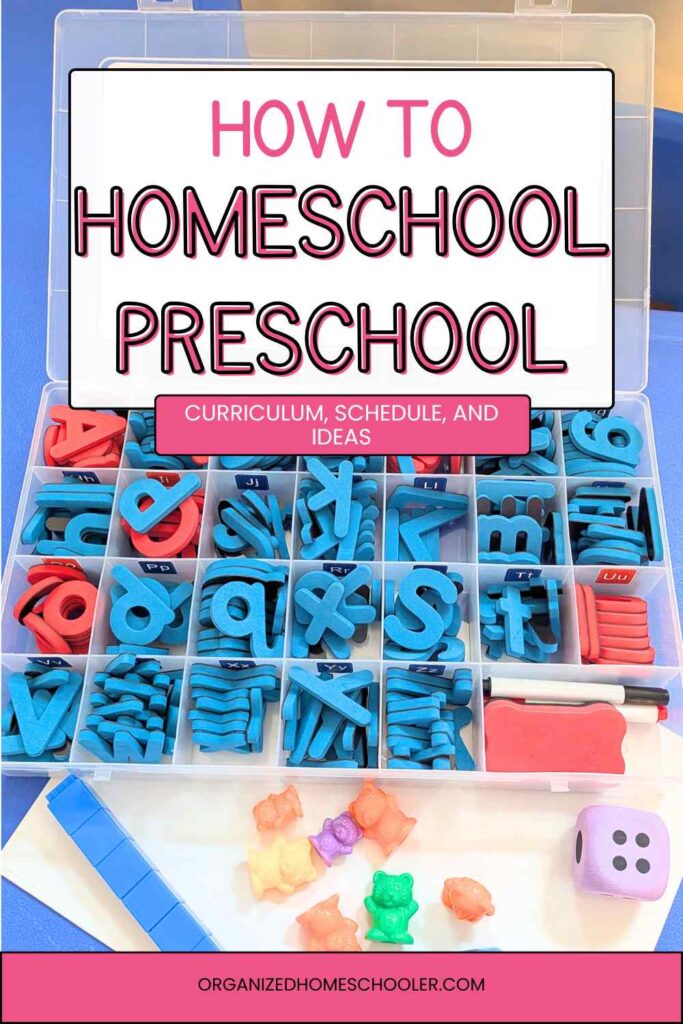
What Is Homeschool Preschool?
Homeschool preschool means you are teaching your preschool-aged child at home instead of enrolling them in a traditional preschool program. Most children begin preschool around 3 or 4 years old, however you can begin homeschooling preschool when your child is ready. While you can begin homeschool preschool activities anytime, I think this guide will be most helpful for families who are homeschooling the year before kindergarten.
Families choose to homeschool preschool for many different reasons. Some want a type of preschool environment that isn’t available near their home, some need to save money instead of paying traditional preschool tuition, and others want to begin including their preschool-age child in their homeschool routine.
As your child’s parent, you already know their personality, interests, and learning style better than anyone else. With a little planning, plenty of books, hands-on activities, and a willingness to facilitate educational experiences for your child, you can build a strong foundation that prepares them for kindergarten.
Should You Homeschool Preschool?
When parents ask me if they should homeschool preschool, I ask a few questions:
- Do you want to homeschool preschool?
- Do you have time in your day to plan, prepare, and execute educational activities?
- Do you have access to social activities for your young child?
If you answered yes to all of the above questions, you will likely enjoy the homeschool preschool experience. If you answered no to any of the above questions, tread carefully. Homeschooling preschool well requires interest, time, and a social network. Homeschooling is not the only way to offer your child an amazing preschool experience.
One additional question I like to ask is, “Does your preschooler want to be homeschooled?” Young children do not get to make educational decisions, but I do think it is okay to take their feelings into consideration. You may find that they have very strong feelings one way or the other. Of course, only ask them if you have the option to homeschool or to send them to a traditional preschool.
Do You Need a Preschool Curriculum?
A full preschool curriculum is not necessary, although I do recommend using a phonics curriculum. There are many ways to homeschool preschool. Some families enjoy following a structured curriculum from start to finish, while others prefer mixing and matching resources or learning through everyday experiences. Some families want a scripted lesson to follow, and others prefer to meet educational goals by exploring topics together. The best approach is the one that fits your family’s personality, schedule, and teaching style.
Structured curriculum
If you like having lessons completely planned for you, a structured preschool curriculum might be a good fit. Many structured programs include a daily schedule, book suggestions, hands-on activities, and lessons that build on one another. This can be helpful if you want as much guidance and support for the early years of homeschooling as possible.
Unit Studies
Unit studies are another popular way to homeschool preschool and elementary grades. Instead of teaching subjects separately, you choose a theme and incorporate reading, science, math, art, and hands-on activities around that topic.
For example, an apple unit might include reading books about apples, counting apples, making homemade applesauce, visiting an orchard to see how apples grow, creating apple art, and practicing the letter A. A space unit could include books about the planets, simple constellation crafts, counting stars, and imaginative play with rockets and astronaut costumes.
Eclectic
Many homeschool families take an eclectic approach, choosing resources from a variety of publishers instead of following a single program.
For example, you might use one resource to introduce letters, another for early math, borrow books from the library based on your child’s interests, and add plenty of crafts, sensory bins, and outdoor exploration throughout the week. This flexible approach allows you to customize your child’s preschool experience while keeping learning fresh and engaging.
The eclectic approach is my favorite way to homeschool because it combines the benefits of using a structured curriculum with the flexibility of unit studies.
Related Post: The Best Preschool Homeschool Curriculum Options
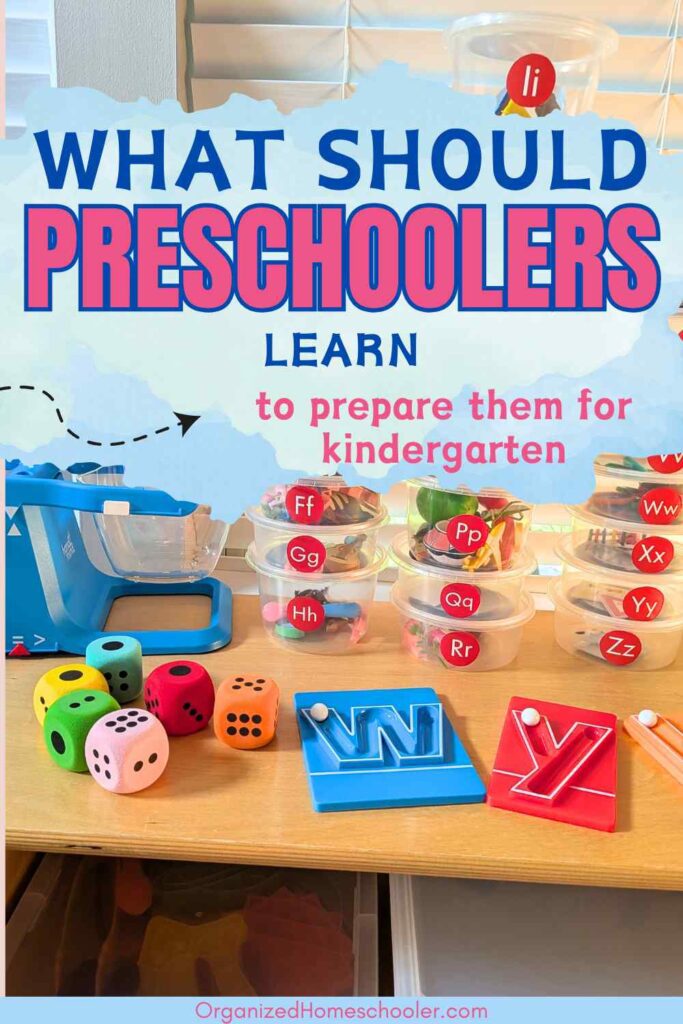
What Should Preschoolers Learn?
One question that many parents have when they begin homeschooling preschool is, “What should my child actually be learning?” Preschool is not about pushing children into formal academics before they’re ready, but these years are an important time for building foundational skills. We can set them up for future academic success by crafting a preschool experience that is educational while also fun and enjoyable.
A quality homeschool preschool experience focuses on the whole child. Preschoolers are developing early literacy and math skills, but they are also learning how to manage emotions, develop independence, and explore the world around them.
Young children learn through hands-on experiences. A preschool lesson doesn’t have to involve worksheets or even sitting at a table. Singing songs, reading books, playing games, cooking together, exploring outside, and creating art can all provide valuable learning opportunities.
Here are some of the important areas to focus on during the preschool years.
Language & Literacy
Building early literacy skills is one of the most important academic parts of homeschool preschool. Children need a strong foundation in phonological awareness in order to become confident readers.
Preschool literacy activities can include:
- Reading aloud to your child every day
- Recognizing uppercase and lowercase letters
- Learning letter sounds (The All About Reading Phonogram Sounds app can help you teach the correct sounds.)
- Practicing rhyming words (Nursery rhymes are a great way to teach rhyming.)
- Clapping syllables
- Identifying beginning sounds
- Learning new vocabulary words through conversations
- Retelling and acting out their favorite stories
- Recognizing and writing their name
At this age, the goal is not for every child to be reading. The literacy goal is to build a love of books while also developing the foundational skills that will make learning to read easier. All About Reading, Pre-Reading is a fantastic curriculum to teach many of the recommended literacy skills.
Math
Preschool math is about developing number sense and learning how math works in everyday life. Children can learn important concepts through games, manipulatives, cooking, and everyday routines.
Preschool math activities might include:
- Counting objects
- Recognizing numbers
- Comparing more and less
- Sorting objects by color, size, or shape
- Creating patterns
- Measuring while helping a parent cook
- Filling and emptying containers in a sensory bin, rice table, or sandbox
- Playing simple board games like Candyland or Chutes and Ladders
- Talking about the family calendar
Related Posts:
Science
Preschoolers are naturally curious. They ask questions, notice details, and want to understand how the world works. Homeschool preschool is a wonderful opportunity to encourage that curiosity.
Science activities for preschoolers can include:
- Observing animals and plants
- Exploring weather
- Conducting simple experiments
- Going on nature walks
- Learning about the human body
- Observing changes in seasons
- Asking questions and making predictions
Social Studies
Preschool social studies begins with helping children understand their place in the world. At this age, social studies is not about memorizing historical dates or events. Instead, it is about building connections, learning about communities, and developing curiosity about people and places.
Homeschool preschool is a wonderful opportunity to explore social studies through books, conversations, family traditions, field trips, and hands-on experiences.
Preschool social studies activities can include:
- Learning about community helpers
- Understanding your family structure
- Introducing basic map skills such as creating a map or differentiating between land and water
- Celebrating holidays
- Learning about family and community traditions
Fine Motor Skills
Developing fine motor skills is an important part of preschool because it prepares children for activities such as writing, cutting, buttoning shirts, zipping jackets, and tying shoes.
Activities that strengthen fine motor skills include:
- Drawing and coloring
- Cutting with child-safe scissors
- Playing with play dough
- Using kid tweezers or tongs
- Stringing beads
- Threading a shoelace through lacing cards
- Building with small blocks
- Tracing lines and shapes
- Completing puzzles
Strong hand muscles and coordination take time to develop, so frequent opportunities to use hands in different ways are beneficial.
Life Skills
Homeschool preschool also provides frequent opportunities to teach practical life skills. Preschoolers love being helpful and taking on more independence.
Preschoolers can practice:
- Cleaning up toys
- Getting dressed independently
- Helping prepare simple food
- Following simple routines
- Completing basic household tasks such as feeding a pet
- Making choices and experiencing the outcomes (only when it is safe)
Social Skills
While academics are often the focus when parents think about kindergarten readiness, the ability to communicate effectively, cooperate, and interact with other children and adults is also important.
Homeschool preschool provides many natural opportunities to practice social skills in a low-pressure environment. Through play dates, family interactions, and community experiences, children can learn how to build relationships and navigate everyday situations.
Preschoolers are learning how to:
- Take turns and share
- Listen when someone else is speaking
- Follow simple directions
- Work together to solve problems
- Ask for help when they need it
- Use kind words and actions
- Respect personal space and boundaries
- Participate in group activities
- Practice patience and flexibility
- Handle disagreements appropriately
- Respect the word “no”
Playing board games, attending library story time, spending time with friends, and participating in community activities all provide valuable opportunities for social development.
The Rabbit Trails Preschool curriculum teaches social skills through themed books and hands-on activities.
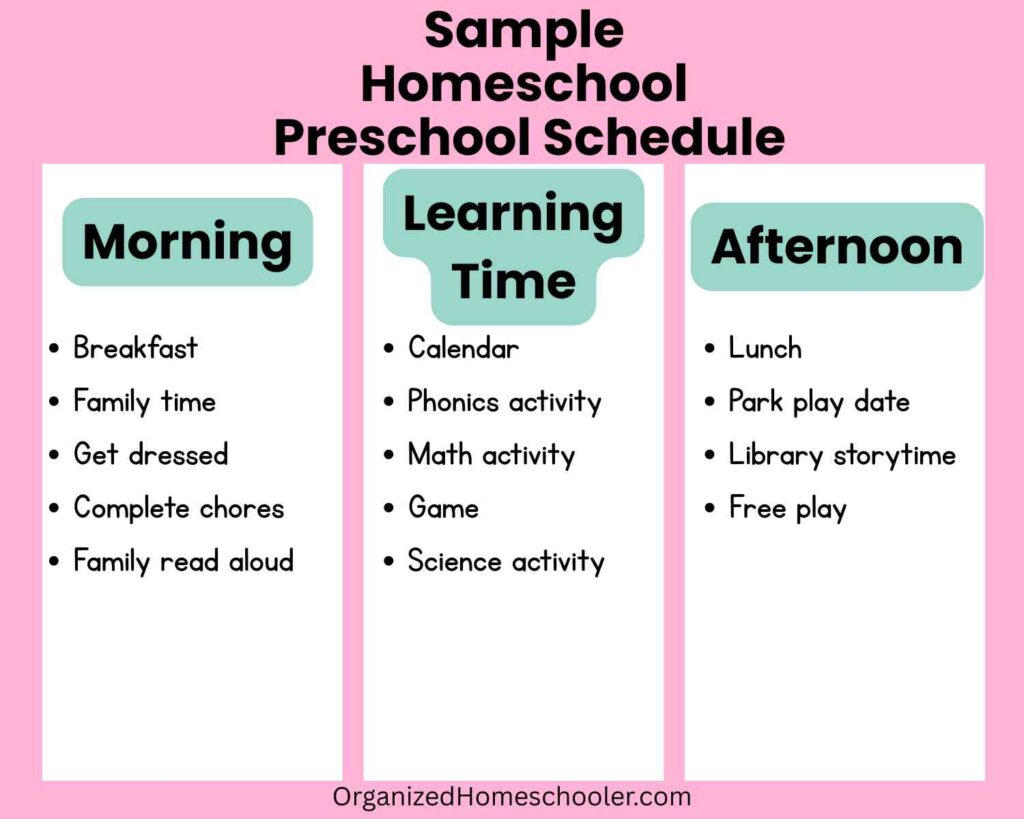
How to Create a Homeschool Preschool Schedule
A homeschool preschool schedule should provide a predictable rhythm to your day while still leaving plenty of time for curiosity. Many preschoolers thrive when they know what to expect, but the schedule should be flexible enough to follow your child’s needs and interests while managing daily life.
Every family’s schedule will look different, but here is an example of what a simple homeschool preschool day might look like:
Morning Routine
- Breakfast and morning family time
- Get dressed and complete simple chores
- Read aloud together
Preschool Learning Time
- Calendar or weather discussion
- Letter or phonics activity
- Math activity or game
- Hands-on science, art, or themed activity
Related Post: Calendar Wall Options for Home
Afternoon
- Free play
- Outdoor exploration
- Library visit, errands, or community activities
- Read aloud time
The goal is to create a homeschool preschool routine that you can follow consistently, not a schedule planned down to the minute that just creates stress for parents and 4-year-olds. Consistency always beats perfection.
Homeschool Preschool Themes
Preschool themes are a fun way to plan and organize your homeschool preschool activities. Instead of teaching individual skills, themed learning allows children to explore a topic from multiple angles through books, science, math, art, sensory activities, and hands-on experiences.
Young children are naturally curious, and themes help build on the things they already love. A child who is interested in animals can practice counting with animal manipulatives, read books about different creatures, go on a field trip to the zoo, learn about animal habitats, create animal art, and explore science concepts like animal needs and life cycles.
When choosing homeschool preschool themes, consider your child’s interests, the season, and upcoming holidays. A few days or even a full month can be spent exploring a favorite theme depending on your child’s attention and curiosity.
Related Post: Educational Holidays to Add to Your Homeschool Calendar
Here are some popular homeschool preschool themes to explore throughout the year:
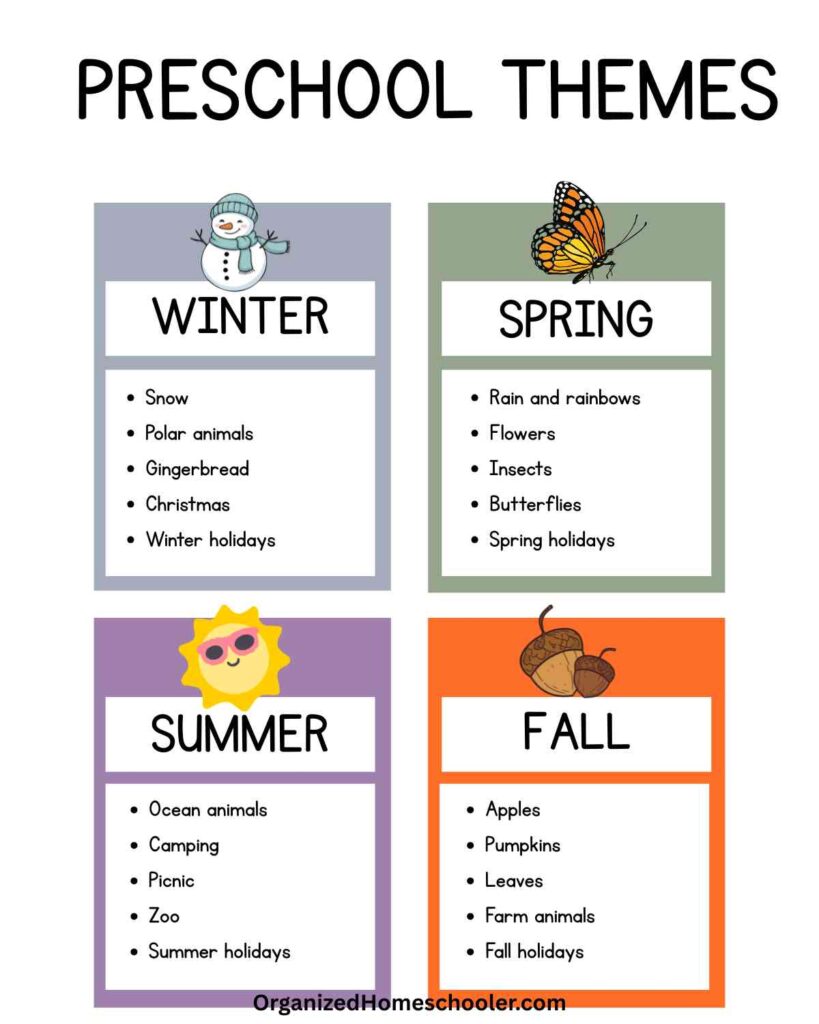
Fall
- Apples
- Pumpkins
- Leaves
- Farm animals
Winter
- Snow
- Polar animals
- Gingerbread
- Christmas
- Winter holidays
Spring
- Rain and rainbows
- Flowers
- Insects
- Butterflies
Summer
- Ocean
- Camping
- Picnic
- Zoo
Best Supplies for Homeschool Preschool
You do not need a dedicated preschool classroom or shelves full of expensive equipment to homeschool preschool. You probably have plenty of useful materials already. However, a few carefully selected preschool supplies can make it easier to create activities that foster early literacy, math skills, creativity, and fine motor development. Focus on tools that encourage exploration and that can be used over and over again.
Preschool Art Supplies
- Crayons
- Washable markers
- Watercolors
- Paintbrushes
- Paint sticks
- Glue sticks
- Scissors
- Dot markers
- Construction paper
Fine Motor Supplies
- Play dough
- Play dough tools
- Tweezers
- Beads
- Clothespins
Early Literacy Supplies
- Picture books (A library card is a must-have homeschool supply!)
- Magnetic letters (ad)
- Letter formation tracers for each letter of the alphabet
- Whiteboard and dry-erase markers
Preschool Math Supplies
- Counting bears
- Large dice
- Bucket balance scale
- Linking cubes (ad)
- Ruler
- Geoboards and rubber bands (ad)
- Pattern blocks
- Measuring cups
Science Supplies
- Magnifying glasses (I liked to keep a magnifying glass in our park day bag.)
- Butterfly habitat
- Magnet kit
- Simple experiment kit
- Gardening supplies
Dramatic Play
Dramatic play areas can be a natural way to add writing, math, or reading activities to your preschool homeschool. For example, if your children have a pretend kitchen stocked with real empty food containers, they can read the labels, sort the boxes, and write a grocery list. They can also turn the play kitchen into a restaurant and write menus, take orders, and add up pretend bills.
- Pretend kitchen
- Cash register
- Play mat rug
Free Homeschool Preschool Resources
Free Chicka Chicka Boom Book Preschool Lesson – Explore this beloved picture book with related hands-on activities.
All About Learning Press Free Resources – These free printable activities from All About Learning Press will help your preschool practice phonological awareness, learning the alphabet, and early math skills.
Preschool Mom – Preschool Mom offers free printable preschool resources on a wide variety of topics. This is a fantastic resource if you are planning a preschool unit study.
K5Learning – K5Learning offers free printable worksheets for preschoolers.
Core Knowledge – Core Knowledge offers full social studies, science, social skills, and language arts curricula for download.
Frequently Asked Questions About How to Homeschool Preschool
What age should I start homeschooling preschool?
Most families start introducing intentional preschool activities when their child is 3 or 4 years old, but every child develops at their own pace.
For younger preschoolers, around age 3, learning should focus primarily on play, exploration, reading aloud, and everyday experiences. It is okay to use a curriculum if you would like, but don’t be afraid to go slow or take breaks.
As children get closer to kindergarten, many families begin introducing more academic activities, such as letter names and sounds, counting, identifying shapes and colors, and practicing fine motor skills. Even then, lessons should remain short, engaging, and progressing at your child’s pace.
How much time should homeschooling preschool take?
For most preschoolers, 20 to 30 minutes of focused learning each day is plenty. This might include practicing letter sounds, playing a counting game, or doing a simple science activity. As your child shows interest, you can gradually add more activities, but you do not need to spend hours each day working on preschool skills.
Keep in mind that learning doesn’t stop when your planned lessons are over. Preschoolers learn throughout the day as they help bake cookies, sort toys while cleaning up, identify house numbers during a walk, listen to stories, build with blocks, or ask questions about the world around them.
Do I need to teach reading?
You do not need to teach reading, but I do recommend working on letter identification and letter sounds. This makes the transition to blending sounds together to read much easier. The All About Reading Pre-Reading curriculum is ideal for preschoolers learning early literacy skills.
Should preschoolers do worksheets?
Preschoolers do not need to do worksheets. It is possible to provide an amazing early education experience without using a single worksheet. Young children learn through hands-on experiences, engaging books, and a bit of direct instruction.
Can I homeschool preschool without buying a curriculum?
Absolutely. While I recommend using a phonics curriculum, all curriculum is optional in preschool. Homeschooling preschool without a curriculum requires more time planning, but it also allows you to create a completely customized preschool experience.
What characteristics should I look for in a curriculum?
A preschool curriculum should:
- Feature short lessons – ideally no more than 20 minutes
- Be multi-sensory
- Be engaging
Is preschool required?
Preschool is not required in the United States. Completing a preschool program, in a traditional school or homeschool, is a parental choice. Many homeschool families choose to skip any formal preschool instruction and tailor their homeschool kindergarten year to fit their child’s needs. However, if you plan to enroll your child in a traditional kindergarten, it will benefit them to have the social skills, early literacy, and math skills commonly taught in preschool.
What about socialization?
Developing social skills is an important part of preschool. However, children do not need to attend a traditional preschool or day care in order to get socialization. A few social activities for preschoolers include:
- Library story time
- Homeschool park days
- Homeschool co-ops
- Play dates
- Sports teams or classes
- Religious groups, if that fits your family’s beliefs
I hope this post helps you feel empowered to homeschool preschool in a way that works for your family.
As an Amazon Associate, I earn from qualifying purchases.
Keep reading . . .
- How to Effectively Teach Phonics to Preschoolers at Home
- Best Preschool Homeschool Curriculum Options for Balance
- Educational and Fun Dinosaur Activities for Preschool
- Fun Summer Lesson Plans for Preschoolers
- How to Choose Educational Preschool Toys
- Groundhog Day Activities for Preschool and Elementary Age Kids
- The Best Gifts for Kids Who Love Science
- Homeschooling Kindergarten: Everything You Need to Know
- The Kissing Hand Activities and Printables