
Best Preschool Homeschool Curriculum Options for Balance
I earn a commission from products purchased through links in this post.
Preschool homeschool doesn’t have to mean hours of worksheets or formal schoolwork. The best preschool homeschool curriculum combines short, age-appropriate lessons with plenty of play, reading, hands-on activities, and time to explore.
I’ve looked at the most popular preschool homeschool curriculum options and narrowed them down based on ease of use, amount of prep, hands-on learning, academic skills, cost, and how well each option fits the developmental needs of preschoolers.
Homeschooling, even at the preschool level, offers a lot of flexibility. You can choose to use a full curriculum that covers all of the subjects or choose curriculum options for individual subjects.
My children are in their late teens and early twenties, so I haven’t personally used these curriculum options. However, I do have the expertise to narrow down all of the options to the best preschool homeschool curriculum options.
I earned an early education teaching certificate from three states and am a former classroom teacher. I taught kindergarten in both public and private schools. I have also homeschooled from kindergarten through the senior year of high school. I have seen how early childhood education choices impact future learning.
There are a few characteristics I look for in a preschool curriculum:
- Playful learning approach – Young children learn best when they are having fun. It is possible to blend play-based learning with academics in a way that works for kids and adults. Hands-on activities are essential in a preschool homeschool curriculum.
- Not online – We try to limit screen time for little eyes, so let’s save it for when a homeschool mom or day needs a few quiet minutes.
- Doesn’t take much time – Preschoolers do not need to spend hours focused on intentional educational activities. Little learners are naturally learning all day through daily life. I think 2 hours a day, broken into multiple segments and including educational play, is the sweet spot for preschoolers.
- Emphasis on traditional preschool learning objectives such as letter recognition, phonics, counting basics, nursery rhymes, and fine motor skills.
Essentially, I look for balance. The best preschool homeschool curriculum options will include a blend of strong academics and play. It will provide a gentle introduction to learning while also letting children progress at their own pace.
Best Preschool Homeschool Curriculum Options for Balance

All About Reading
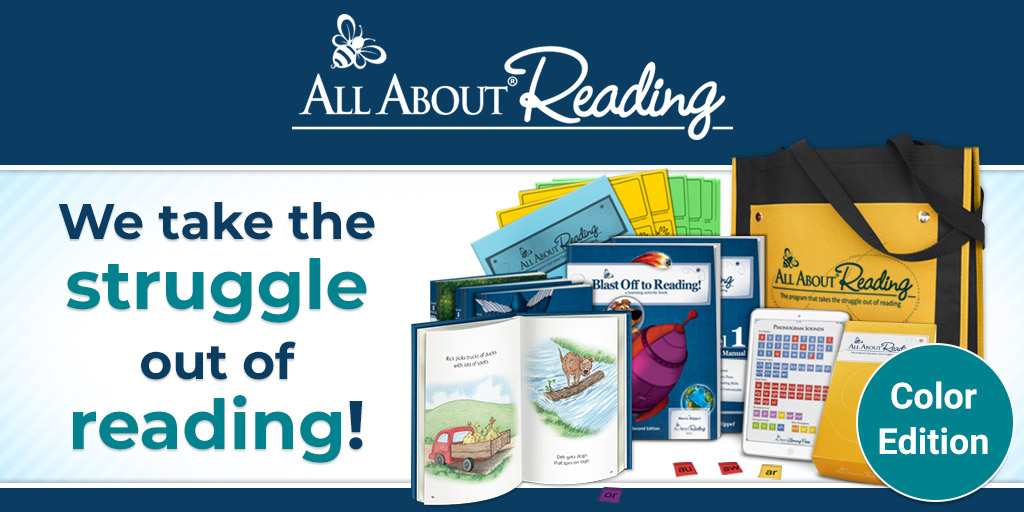
All About Reading is known for its amazing reading curriculum. It provides a multi-sensory learning experience that is backed by research. Thankfully, they have a level intended for preschoolers. The pre-reading curriculum will give preschool-aged children a solid foundation in phonics.
After completing the All About Reading Pre-Reading curriculum, students will be able to:
- Identify uppercase letters
- Identify lowercase letters
- Clap syllables
- Recognize letter sounds
- Blend letter sounds to make a word
- Rhyme
- Identify the beginning sound in a word
- Identify the ending sound in a word
- Answer simple reading comprehension questions
This level of the All About Reading curriculum teaches one letter of the alphabet at a time.
The teacher’s manual clearly lays out the lessons to equip parents to teach early phonics. There is a sample script, interactive activities, and hands-on learning. You do not need to be a trained teacher to use this program.
If you are interested in teaching your preschooler to read, this is the curriculum I would choose. If I ever get the opportunity to homeschool little learners again, this is the reading curriculum I will purchase.
Overall: All About Reading Pre-Reading is a great preschool homeschool curriculum if you want to focus on phonics. It does not teach multiple subjects, but what it does teach – pre-reading skills – it does exceptionally well.
Related Post: Detailed All About Reading Level 1 Review
Timberdoodle
Timberdoodle offers complete curriculum packages for pretty much every age. It is important to choose carefully because the names of the kits are similar.
The Tiny Tots program is for infants and toddlers. The Preschool program is for 2 – 3-year-olds. The Pre-K kit is for 3 – 4-year-olds. There is a faith-based option and a non-religious option.
I’m going to focus on the Pre-K curriculum because I think that is what most parents are looking for when they search for preschool homeschool curricula.
Within each curriculum, there are three more options:
- Basic
- Complete
- Elite
The Basic package is the smallest, but it is also the cheapest. It focuses on preschool language arts and math and does not contain material for geography, social studies, or art.
The Complete package contains language arts, math, history and social studies, geography, STEM, and art lesson plans. It does not contain educational toys like puzzles, bingo, and Wikki Stix.
The Elite package contains everything in the complete package, plus fun educational toys.
I like Timberdoodle because it is a multi-sensory approach to learning that works for a wide variety of learning styles. This preschool homeschool curriculum might be a good fit for parents who want a full curriculum that lays out exactly what parents should do.
The main drawback to Timberdoodle is that this preschool curriculum is very pricey. The preschool curriculum options range from $459 – $1215. That is expensive compared to many other preschool homeschool curriculum options, but might be affordable compared to a year of traditional preschool.
Overall: Timberdoodle is a complete preschool curriculum kit that takes the guesswork out of what to teach. It might be a good option if you need everything to arrive in one box, already planned. I would skip it if budget is a consideration or you want more control over the pre-k curriculum.
Before Five in a Row


Last update on 2026-10-29 / Affiliate links / Images from Amazon Product Advertising API
Before Five in a Row is a simple preschool homeschool curriculum that revolves around classic children’s books. The guidebook suggests preschool activities that are essentially literature-based unit studies. It might be a good option if you are interested in a Charlotte Mason-style approach.
This book is divided into two sections. The first section includes 24 books with themed extension activities to make the most of each story. The activities include:
- Bible (This is easily skipped if it isn’t your thing.)
- Art
- Science
- Memory
- Literature
The second section contains suggestions for educational activities for parents to enjoy with their preschoolers. There are ideas for making everyday activities like bath time, grocery shopping, and bedtime educational.
I like that Before Five in a Row combines great picture books with simple educational activities. I think that teaching with a picture book is a fantastic way to encourage a great way to keep kids interested in learning to read. It is also pretty affordable at $50.
The main drawback to Before Five in a Row is that parents will need to gather the books and materials in order to do any of the suggested activities.
Overall: Before Five in a Row is a great pre-k homeschool curriculum option if you enjoy library visits, reading books, and putting together activities. Before Five in a Row provides the ideas, but parents will still need to put everything together in a way that works for their family.
This is great if you value flexibility, but not ideal if you need something that is open-and-go. I recommend adding a systematic phonics curriculum.
Playing Preschool
Playing Preschool is a downloadable guide to help parents teach their preschool children at home. It contains 190 days’ worth of planned lessons spread over 38 weeks.
The weekly schedule has a theme and a letter of the week. The weekly lesson plans have the following daily activities:
- Opening activity (like calendar time)
- Read-alouds with great books
- Things to discuss
- Learning activity for parent and child to do together
- Easy activity for a preschooler to do independently
The lessons are designed to be short since preschoolers naturally have short attention spans. They only take about 45 minutes each day. This leaves plenty of time for park days, library story times, and field trips.
I really like that the activities are designed to be progressive. For example, the lesson 20 activities are harder than the lesson 2 activities. I think that the thematic units format is naturally engaging and can be so much fun. It is also affordable at only $39.
The main downside is that parents will need to gather all of the supplies, although most of them are common household materials.
Overall: Playing Preschool is a fantastic preschool homeschool curriculum. The lessons are planned and appropriate for preschool-age kids. If you have the time and ability to gather the supplies, this could be a great way to gently begin homeschooling.
I think the phonics instruction is a bit light, though, so I would consider adding a phonics curriculum if you want your child to learn letter sounds in preschool.
Blossom and Root Early Years
Blossom and Root is a secular nature-based downloadable curriculum, and that applies to their preschool curriculum, too. The early years lessons are hands-on and play-based, which works really well for young learners.
There are lesson plans for 36 weeks of school. Every week includes:
- Nature study
- Picture and composer study
- Art projects
- Kitchen activities
- Math activities
- Science activities
- Read alouds
There are two volumes of the Early Years curriculum. Volume one is for younger preschoolers and volume two is for older preschoolers, but really, you can choose whichever one seems best for your family.
The lessons are short and to the point, lasting only about an hour a day. Short preschool lessons are helpful if you are also homeschooling older children.
I like the Blossom and Root Early Years curriculum because it is play-based with zero worksheets or busy work. It is also really affordable at $22 – $45.
Parents will need to gather all of the books and other resources because this preschool homeschool curriculum only includes the downloadable PDF guide.
Overall: Blossom and Root Early Years is a great option for families who love nature, science, and being outside. It might also work well if you have an older child using the Blossom and Root Curriculum. I wish it included more phonics instruction, but that can be supplemented.

Book Shark
Book Shark is a preschool homeschool curriculum that focuses on global awareness. Kids will learn about countries and cultures around the globe while also spending time learning literacy, math, and science skills.
It is fully planned, making it quick and easy to implement, with a time commitment of about an hour a day. The lesson plans are very detailed. They tell the parents exactly what pages to read each day. The plans also suggest vocabulary words and questions to discuss.
Everything is included in the kit.
The kit contains:
- Teacher’s guide
- Books (lots of books!)
- Math manipulatives
- Developing Early Learning Skills Workbook
I like that BookShark introduces children to global cultures at a young age.
BookShark is on the expensive side at about $310, but it does include all of the books required.
Overall: Bookshark pre-k curriculum can be a good option if you want to open a box and be ready to teach preschool. They include the lesson plans, books, and hands-on activities.
Torchlight
Torchlight is a downloadable, secular, literature-based preschool curriculum. Every week revolves around a theme. The books and activities are all based on that topic.
The lesson plans span 32 weeks. The weeks contain plans for Monday – Thursday, allowing Friday to be free for field trips or to catch up. Each week includes:
- Language arts
- Emotional intelligence
- Math
- Science
- Art
- Book list
- Supplemental activity list
- Extension activities
The activities are a mix of hands-on and worksheets.
I like that Torchlight leaves Fridays free. It can be really nice to homeschool four days a week and have a day free for field trips, play dates, chores, or traveling. It is also affordable at only $32. Parents will need to gather all of the materials needed, but that shouldn’t be too difficult.
Overall: Torchlight Level Pre-K is an interesting curriculum because it is one of the few that teaches emotional intelligence while also teaching traditional academic preschool concepts. It is inquiry-based.
Typically, I lean more towards an efficient mix of explicit instruction and hands-on activities, but I think preschool is a time when an inquiry-based model might be fun and engaging.
My Personal Favorite Preschool Homeschool Curriculum
If I had to choose one preschool homeschool curriculum to use, I would choose All About Reading. This program provides everything you need to teach your preschooler foundational phonics skills, which is a big focus of pre-k.
It does a fantastic job balancing academic instruction and play while also acknowledging the short attention span common among our youngest homeschoolers. This all works to create a lifelong love of learning. Kids love learning when they feel successful.
While I like the ease of the preschool homeschool curriculum kits, they tend to be expensive and out of many budgets. I think we can intentionally create a more affordable preschool homeschool curriculum kit that meets our needs without spending so much money.
Related Post: All About Reading vs. Teach Your Child to Read in 100 Easy Lessons
If I wanted to add a math curriculum to supplement All About Reading, I would choose Math with Confidence. There isn’t a dedicated preschool level, but I own the kindergarten level and think many preschoolers could complete this program without difficulty.
The lessons only take about 15 minutes, 4 times a week, but they are effective. I like that the bulk of the instruction happens through hands-on activities.
Related Post: Math with Confidence Kindergarten: Honest Review
DIY Preschool Homeschool Curriculum Kit
If you like the idea of a boxed preschool homeschool curriculum kit, but don’t like the options, you can create your own kit. This allows you to teach all of the important preschool skills without the enormous price tag.
I would include these items in a homemade preschool homeschool curriculum kit:
- Phonics
- Phonics curriculum – My favorite is All About Reading Pre-Reading
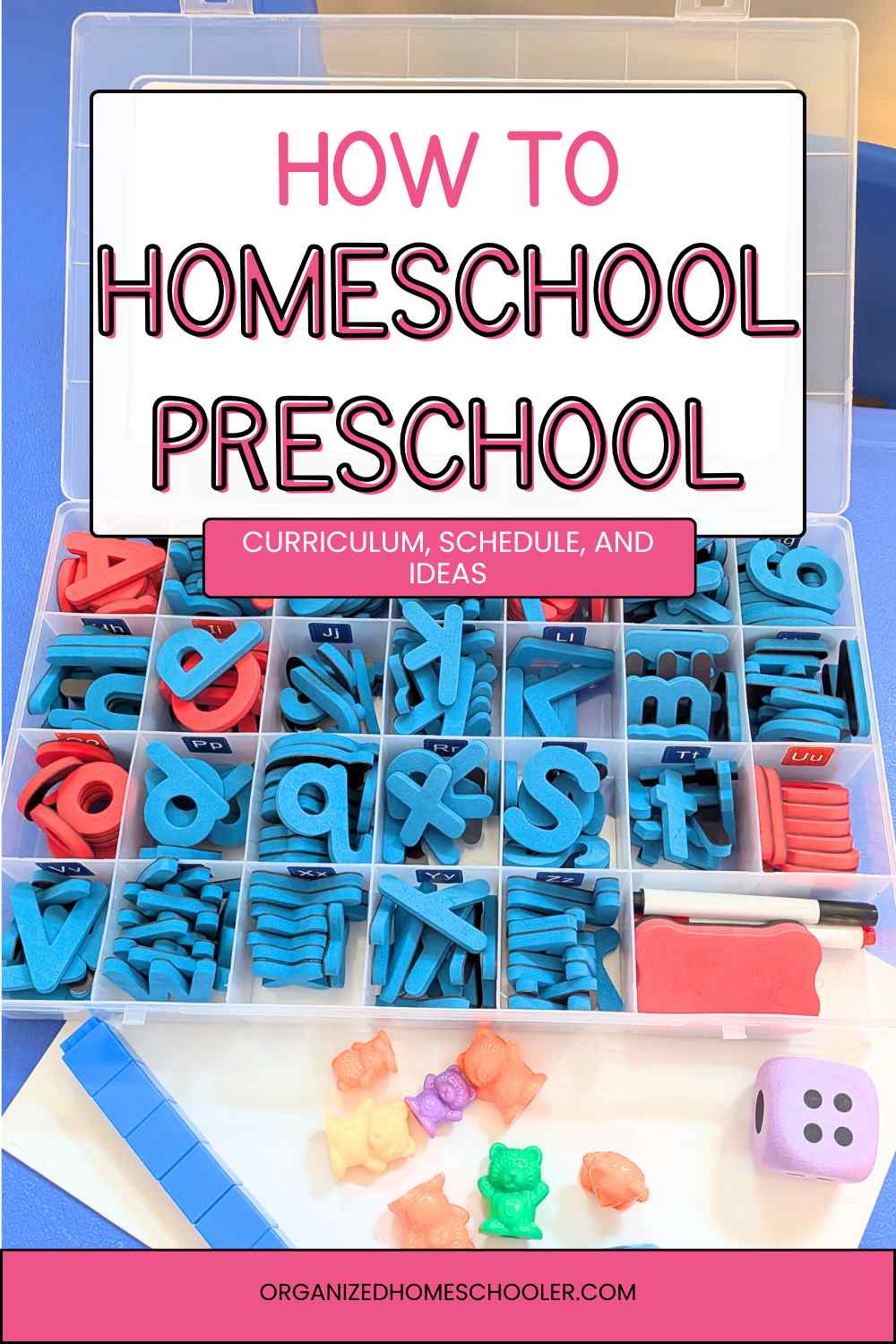
- Alphabet magnets
- Library card – This will let you read new books consistently.
- Math
- Math curriculum or activity book
- Math manipulatives – teddy bear counters, linking cubes, pattern blocks, pretend money
- Calendar set
- Science
- Handwriting
- Writing supplies – paper, pencils (short fat pencils work well for young kids)
- Letter marble tracers
- Shaving cream for a fun way to practice handwriting
- Fine Motor
- Lacing cards or beads
- Play dough
- Crayons
- Tweezers
- Art (This can overlap with fine motor activities.)
- Watercolor paints
- Washable markers
- Construction paper
- Kid-safe scissors
- Glue sticks
You don’t have to buy an expensive preschool curriculum kit to give your child a rich preschool experience. You can choose the curriculum you like best for the academic subjects and then build the rest of your supplies yourself.
Frequently Asked Questions About Homeschooling Preschool
What should a preschool curriculum include?
A preschool curriculum should include:
- Beginning literacy skills like letter recognition, phonemic awareness, letter formation, and rhyming
- Basic math skills like number recognition and counting
- Art – This is a great way to learn colors and shapes, and for little hands to practice fine motor skills.
You do not need to purchase a curriculum for all of the subjects. For example, you might prefer to choose your own art activities while purchasing a phonics curriculum.
These skills will give young children a solid foundation before they enter kindergarten.
Related: How to Effectively Teach Phonics to Preschoolers at Home
How do I fulfill the socialization aspect of preschool at home?
Socialization in the preschool years doesn’t need to be complicated. Kids can play with other children their age at the park, library story time, or in enrichment activities like sports. A preschool homeschool co-op is also an option.
Related: How to Start a Homeschool Co-op
Do I need any special training to homeschool preschool?
No, there is no special training required to teach your own preschooler.
Remember, the best preschool curriculum is the one that works best for your family. Choose the best fit for your family and don’t worry about what other people are doing.
Keep reading . . .
- How to Homeschool Preschool: The Complete Guide for Parents
- How to Effectively Teach Phonics in Preschool
- Fun Summer Lesson Plans for Preschoolers
- How to Choose the Right Curriculum
- 15 Educational and Fun Dinosaur Activities for Preschool
- 6 Summer Lesson Plans for Preschool
- Educational Toys for Preschoolers
- Everything You Need to Know About Homeschooling Kindergarten
As an Amazon Associate I earn from qualifying purchases.